Echo’s Escape
As level designer on a team of five, I was responsible for building the level layouts in a way that guided the player intuitively through each space without relying on explicit instruction. The biggest design challenge I faced was having to decide how exactly I wanted to use the shape language in a way that was subtle enough for the player not to think twice about it, while still creating a believable cave environment, but I managed to figure it out with a bit of trial and error and the player feedback we received after holding a playtesting session on campus. This project became especially meaningful to me as I was able to directly apply the skills I was learning in my Level Design class at the time, taking those concepts that I was originally learning about from a 3D space into a 2D context, and seeing how they functioned similarly to one another.
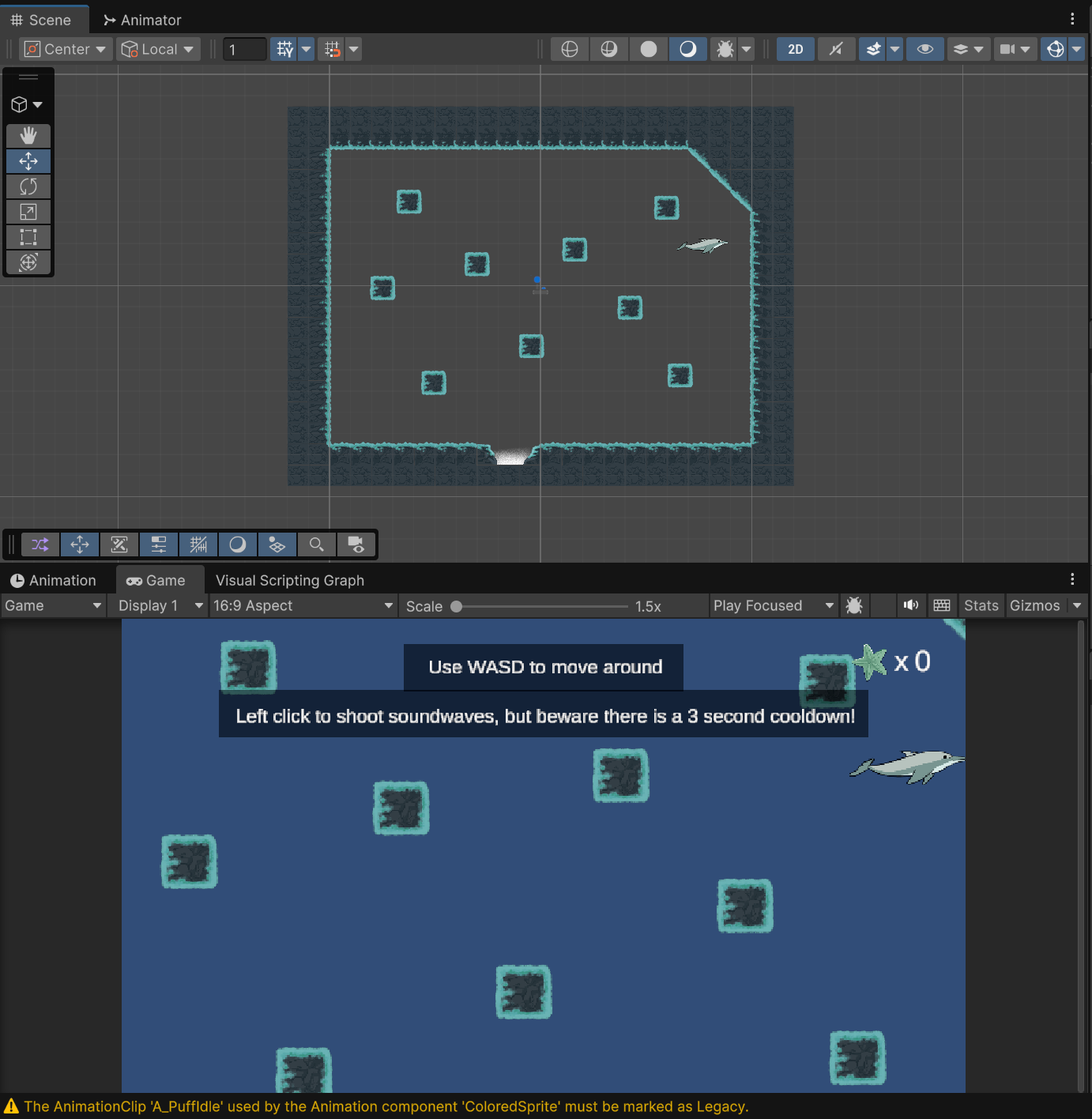
For the first tutorial level, we decided to focus on the movement and echolocation mechanic by itself so the player could have a proper chance of getting a feel for flowy, water-like based movement and having to rely on their echolocation in order to see the environment around them. I simply added a few blocks in the middle of a rectangular space to keep things relatively simple, but still give the player a bit of a challenge that would promote them to using their echolocation more while moving around.
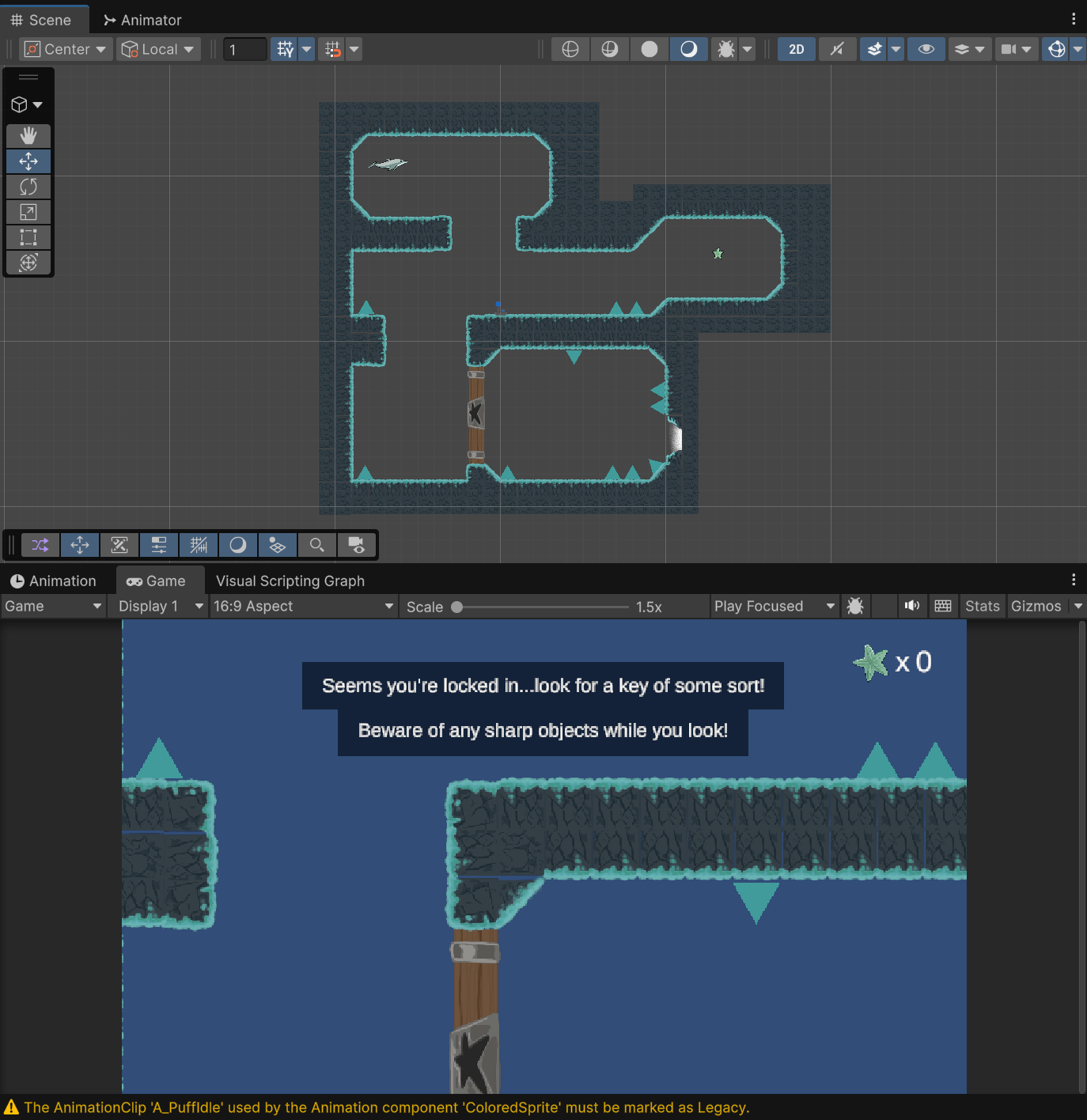
On the second tutorial level, we decided to add a little bit of danger to the player and introduce them to rocks as well as the starfish key. I mainly focused on creating designated areas for each key item by enlarging the space and sectioning them off from the rest of the environment with only long, narrow rectangular spaces to connect them and guide the player further into the space. The player would be able to leave their spawn and into the long, narrow "hallway" that would leave to the starfish key, introducing it to them, but they would have to explore a bit more to find the door and figure out that the key they collected was for said door.
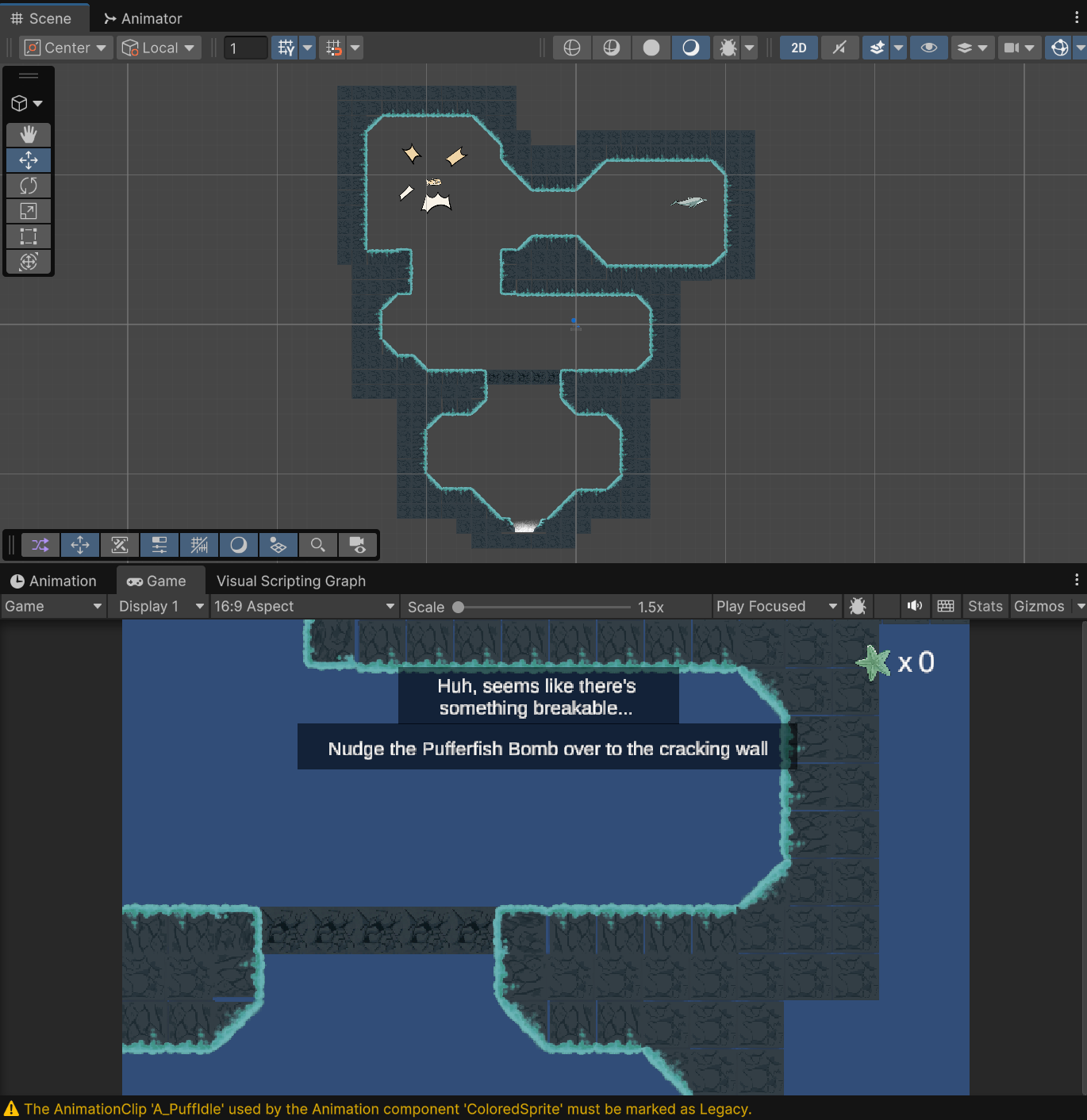
As for the third tutorial level, we wanted to introduce the pufferfish bomb, which works exactly as you would expect. Much like the previous level, I focused on creating designated areas for the player, pufferfish bomb, and the breakable wall that leads into the space for the level exit, by once again enlarging the space and sectioning them off a bit. In this case, the player would almost immediately be introduced to the pufferfish bomb, but would have to explore a little bit more in order to find the breakable wall that can be broken by using the pufferfish bomb.
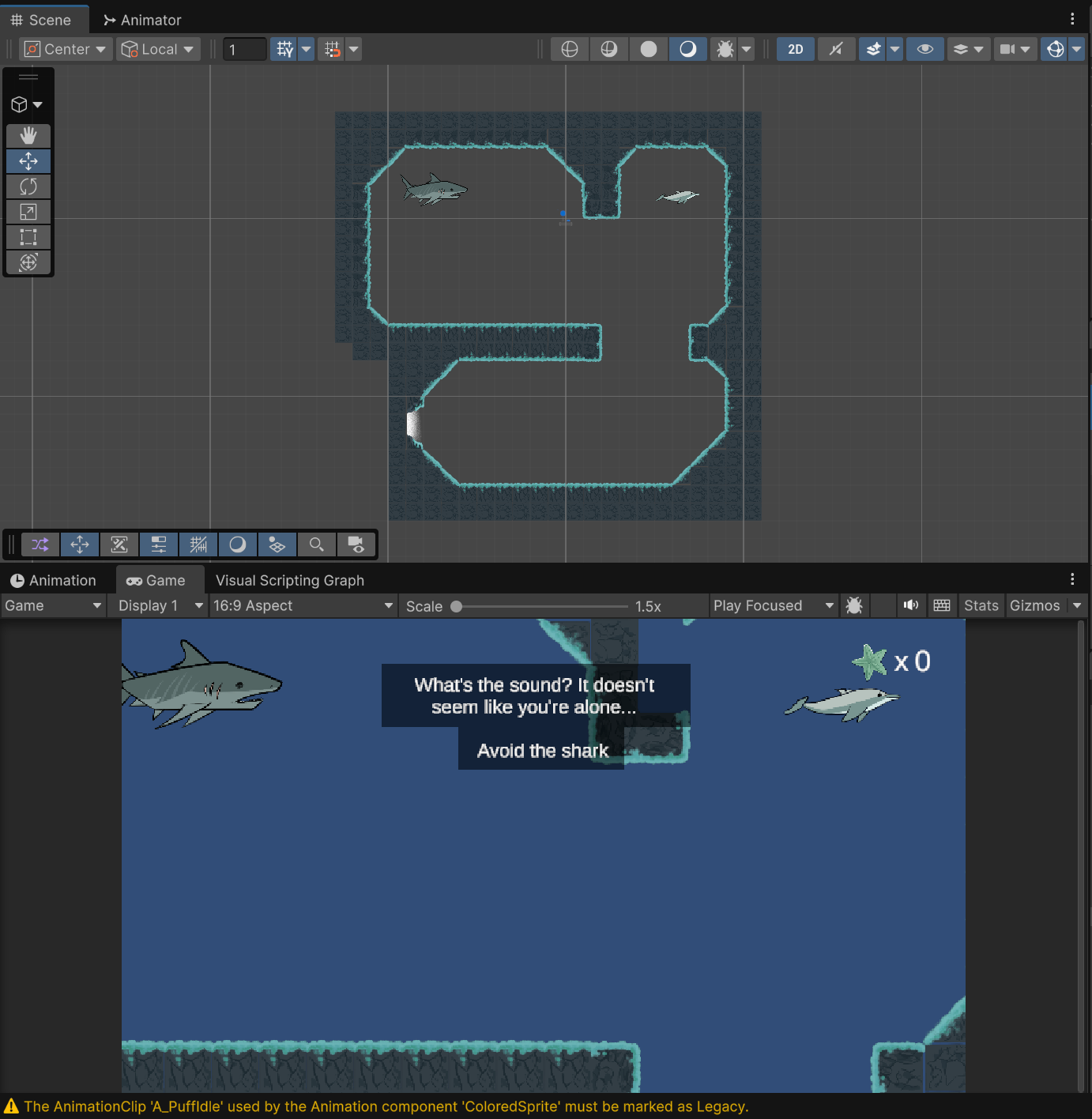
In the second to last tutorial level, we introduced one of the two enemies within the game. For this, I decided to leave the player and the shark in relatively the same open space with a small wall separating the two of them to allow the player a moment to breath before being forced into an introduction with the shark. The player would either have to wait for the shark to move out of their path or they could simply attempt to move around the shark and sink into the level exit area. Either way, they would learn that the shark moves between two locations and they have to avoid it.
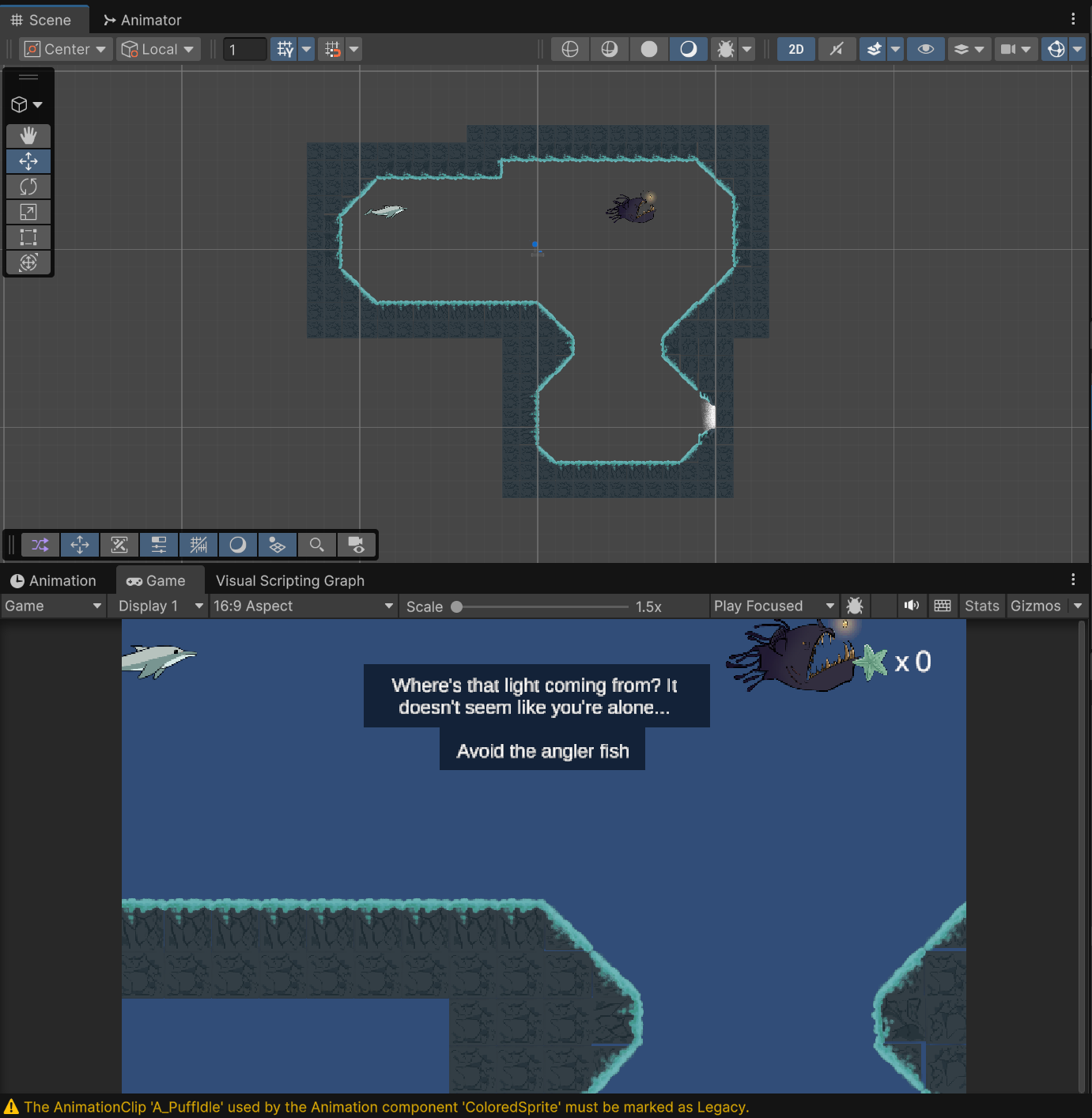
For the final tutorial level, we introduced our second enemy in the game. Similarly to the shark level, I decided to have the player and angler fish share the same open space as one another, but with distance between the two instead of a wall to emulate the same effect of relief for the player. Much like the shark, the player would be forced to interact with the angler fish almost right from the get-go. They would either have to wait for the angler fish to move or attempt to move around it and sink into the exit area, and once again, they would learn that they had to avoid the angler fish as well.
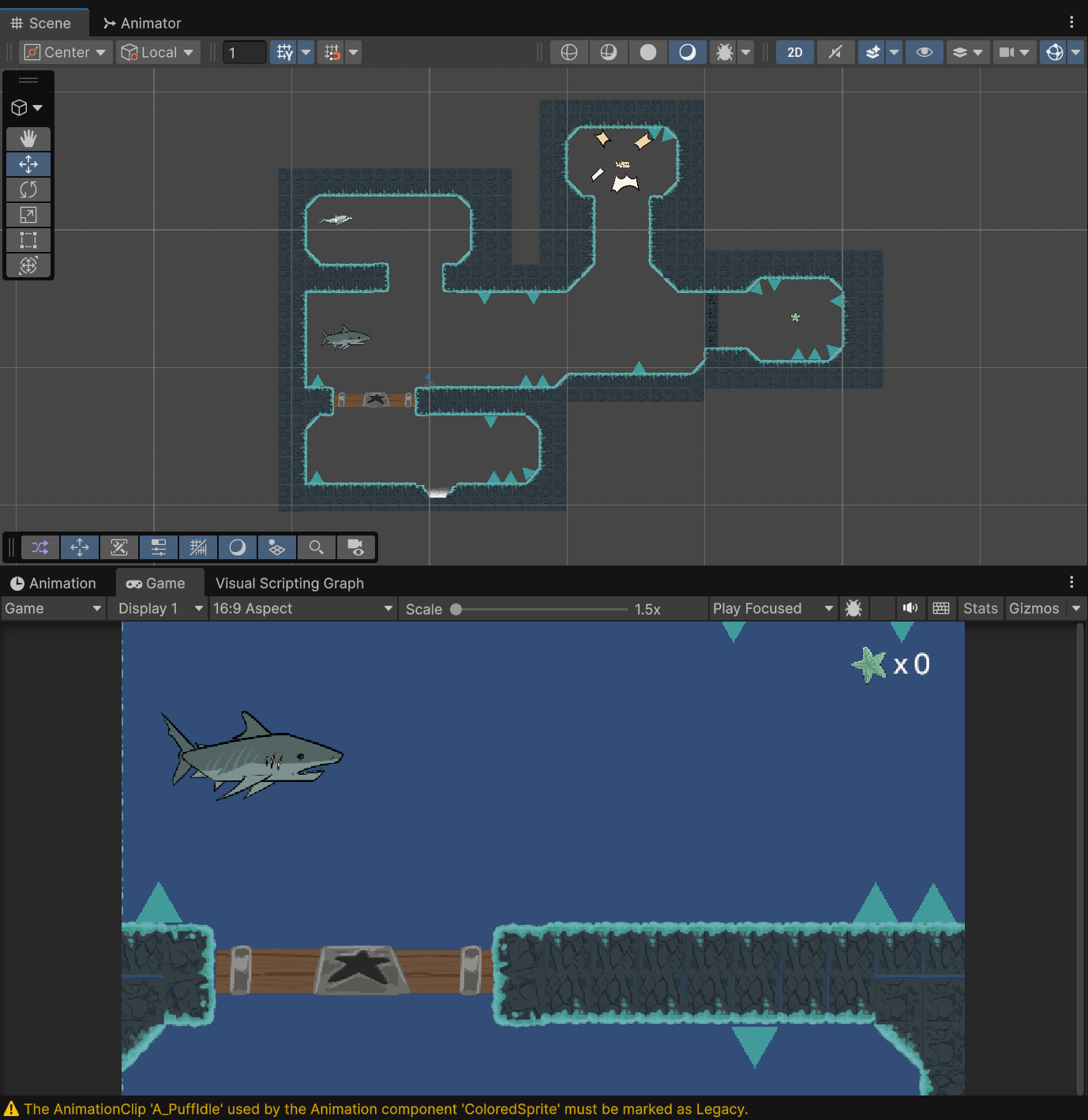
With the first official, non-tutorial level, I was given free-reign as the level designer to create a level that I wanted as long as it combined a few of our primary mechanics that were introduced in the tutorial section of the game. For this level, I utilized the same tactics I had used throughout the tutorial levels, creating designated areas for each key item that were connected by a singular long, narrow rectangular space to guide the player further into the space. To add a bit more of a challenge to the player, the shark was set to patrol the long, narrow rectangular space that connected all the designated areas, so they had to try and avoid the shark not only while getting the pufferfish bomb and starfish key, but also to the door that lead to the exit area as well.
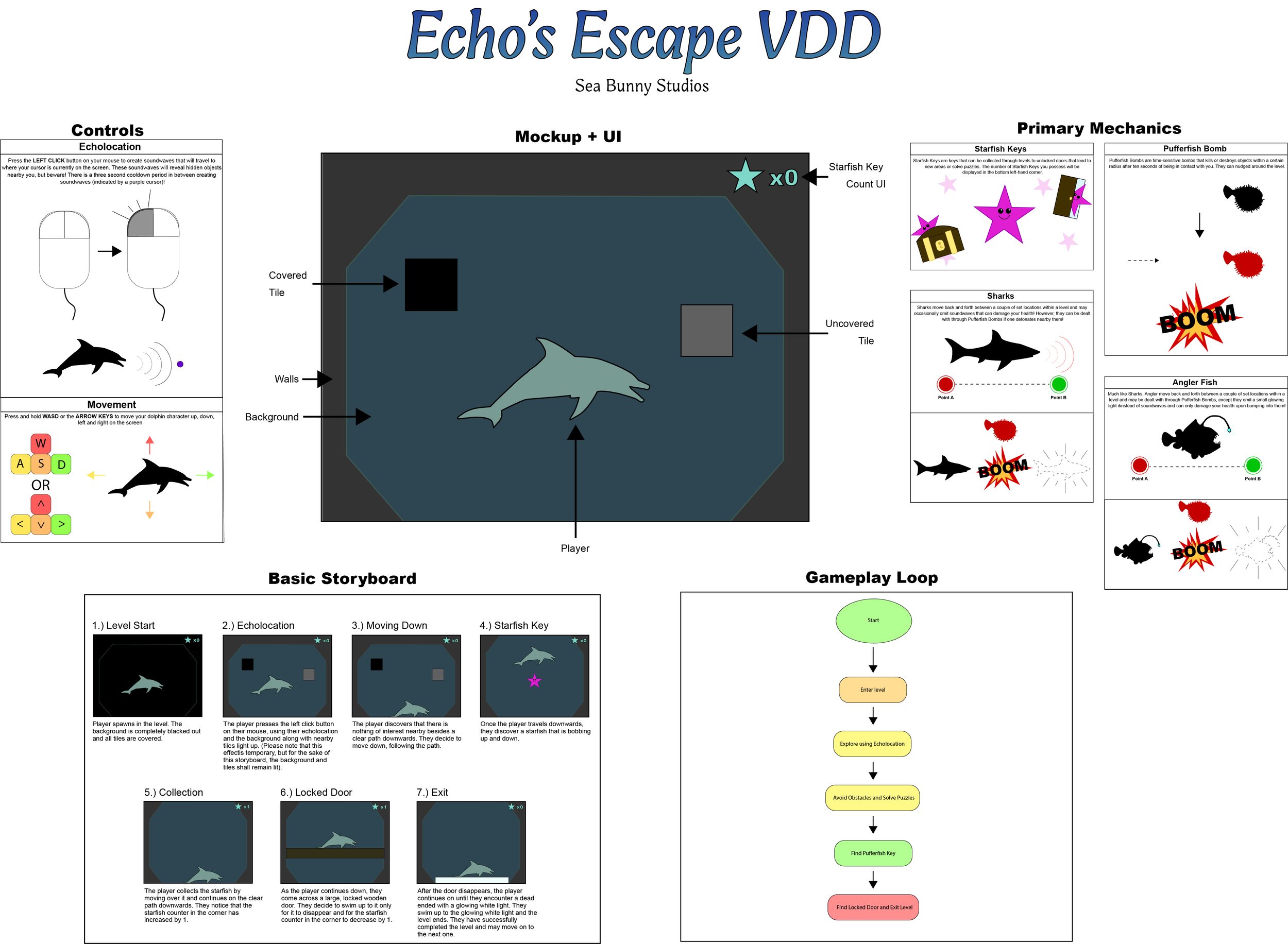
The official Visual Design Document (VDD) I created that includes all of the vital information for the game, such as the controls, the gameplay loop, the primary mechanics, as well as a storyboard to help visually convey the gameplay loop.
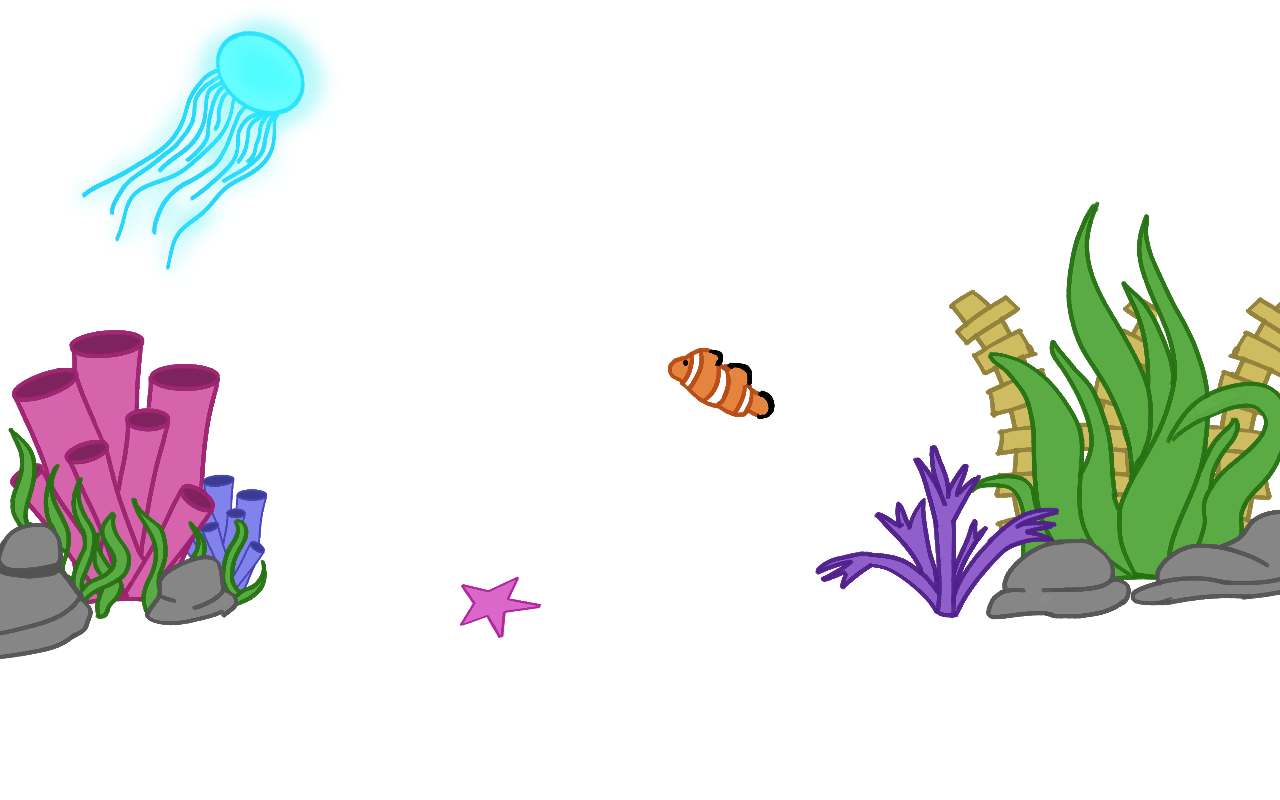
For this project, we created and presented a Google Presentation that gave our classmates an idea of what our game was and how far along in development we were over the four week period. In doing that, we needed assets that were aesthetically pleasing and help immerse our classmates into our game that could be added into our presentation, and so I created a simple yet adaptable background asset for us to use in our update deck that also ended up making it into the background for our main menu.
To solidify our team, we not only created a name for ourselves, but both a text and symbol logo that I created myself with input and feedback from other teammates.